
Traced hop by hop
From a low-privilege principal to administrator. Pathbreak follows the misconfigurations, policy abuse and role assumptions an attacker chains. You see the real path, not a risk score.
Pathbreak is an agentic cloud security platform that discovers and validates the real attack paths a threat actor would exploit across your cloud. It catches the control-plane chains most tools miss.
Built by offensive cloud security practitioners and the team behind redamon (2,000+ stars).
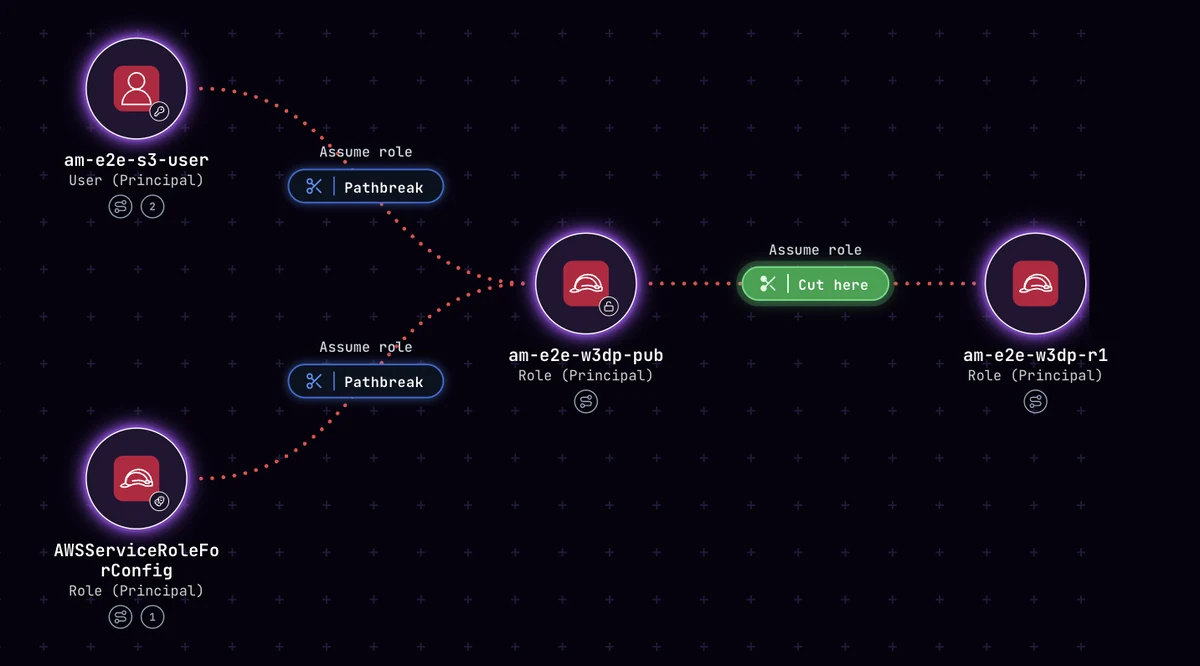
In AWS, IAM privilege escalation hides in policy abuse, role chaining and trust relationships. Most tools stop at correlating settings. Pathbreak's agent validates each chain hop by hop by resolving the real authorization, read-only, so you see the few that are real, not a list of maybes. AWS is available today. Azure and Entra ID come next, with Google Cloud to follow.
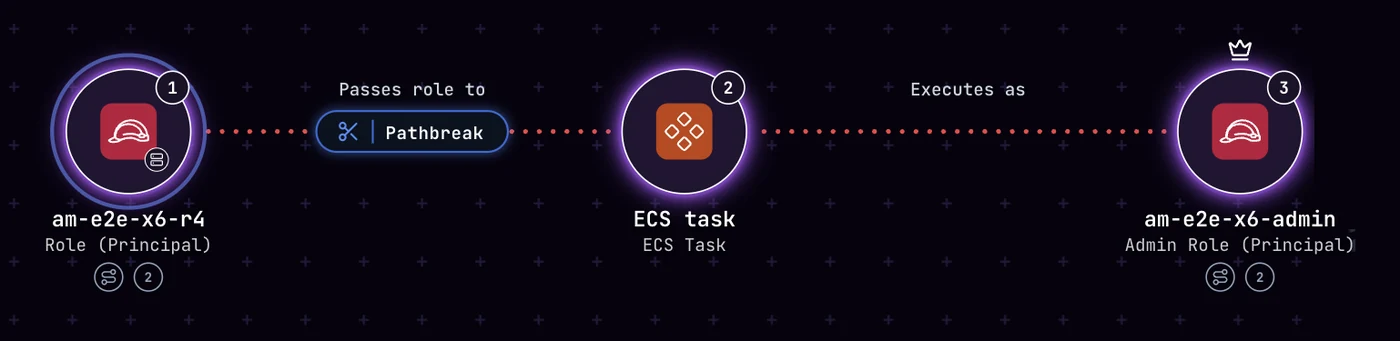
From a low-privilege principal to administrator. Pathbreak follows the misconfigurations, policy abuse and role assumptions an attacker chains. You see the real path, not a risk score.
Other tools correlate settings and guess. Pathbreak's agent validates each escalation chain end to end, read-only, so what you see is a confirmed path, not a hypothetical one.
For each exploitable chain, Pathbreak pinpoints the single highest-leverage fix that severs it. You spend effort on the few paths that grant real power, not on triaging hundreds of low-value findings.
Want to see the IAM privilege-escalation paths live in your own AWS org? We are working with a small number of design partners. Read-only access. You keep the results.
Become a design partnerVulnerability counts don't equal risk. A threat actor doesn't read your dashboard. They chain misconfigurations, identities and trust relationships until they reach something that matters. Pathbreak thinks the way they do.
An agent continuously maps principals, roles, trust relationships and resources, then reasons across them to find paths, not isolated alerts.
Every path is agent-validated, read-only, so you act on what an attacker could actually do, not a static model of what they might.
For each exploitable path, Pathbreak pinpoints the single highest-leverage change that severs the chain, so teams fix what attackers would use.
The dangerous moves rarely live in a CVE list. They live in identity, trust and configuration: the control plane. Pathbreak specializes in exactly these.
From a low-privilege principal to administrator via permission misconfigurations, policy abuse and role chaining, traced hop by hop and agent-validated read-only.
iam:PassRole · sts:AssumeRole · iam:PutRolePolicyTrust relationships that let an attacker step from one account into another, including the over-permissive role assumptions that quietly bridge environments.
sts:AssumeRole · external trustIdentity-driven movement across Microsoft Entra ID, app registrations, consent grants and directory roles that pivot from a foothold to tenant-wide control.
app consent · role assignmentThe final step that turns access into impact, reaching crown-jewel data, secrets and infrastructure once an identity chain has been walked end to end.
secrets · storage · compute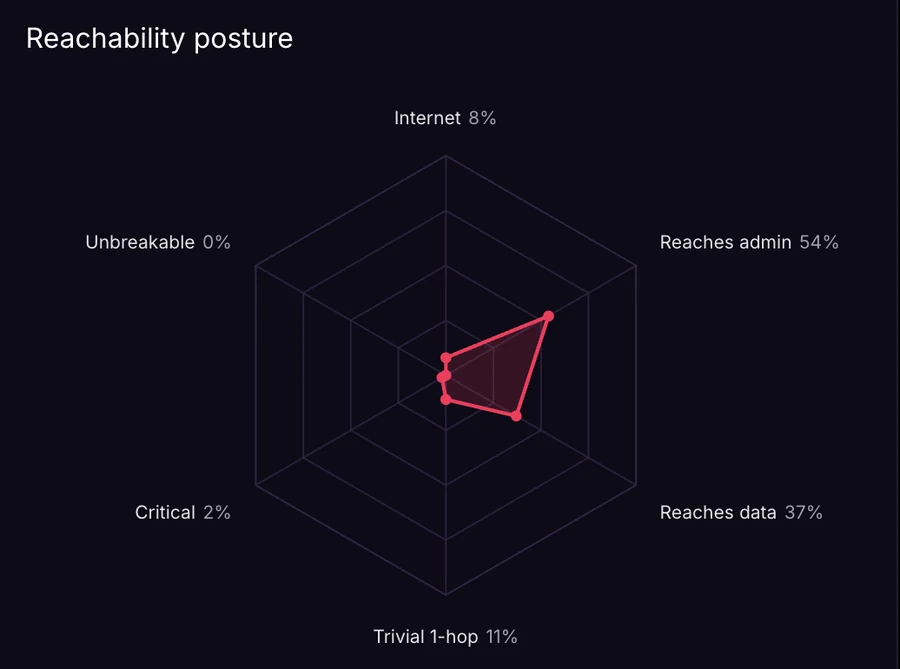
Pathbreak does what a scanner does: exposures and compliance. It goes deeper than the incumbents, into the gaps they leave. That depth comes from the founders, who have worked both sides of cloud security for years and still pentest today. It also validates the attack paths scanners can't see. Replace your stack, or run it alongside.
Hundreds of continuous exposure checks across your AWS accounts, including the control-plane gaps incumbent tools miss, each prioritized by actual exploitability, not raw count.
Every check mapped to SOC 2, ISO 27001, CIS, PCI DSS, HIPAA, NIST and more, with continuous monitoring and audit evidence on demand.
Multi-hop control-plane paths, agent-validated end to end, read-only. Most tools model attack paths; Pathbreak's agent confirms which are real, so you chase the few that matter.
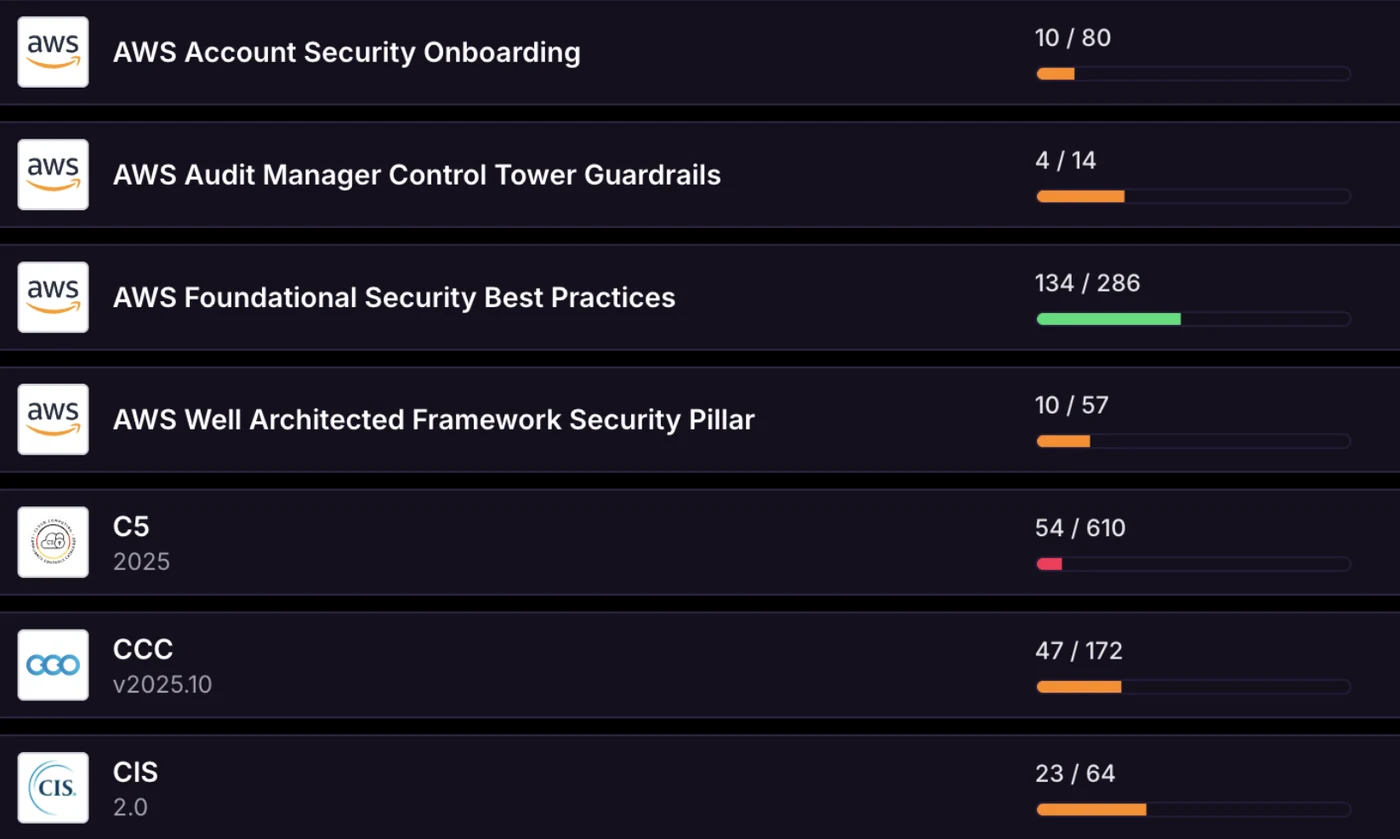
The depth you'd expect from the heavyweight platforms, at a price a real team can get approved, and fully managed so there's nothing to run yourself.
Attack-path depth and broad coverage like the big enterprise platforms, without the enterprise price tag. Serious cloud security shouldn't be reserved for Fortune 500 budgets.
No servers to stand up, no open-source stack to run, patch and babysit. Connect your cloud and Pathbreak does the rest, delivered as SaaS.
Connect your cloud and Pathbreak builds a live graph of every principal, role, trust edge and resource across every account.
The agent reasons across the graph the way an attacker would, chaining control-plane moves into complete, multi-hop attack paths.
Pathbreak's agent validates each candidate path end to end, read-only, so what you see is a confirmed path, not a hypothetical one.
Pathbreak surfaces the few paths that genuinely matter and the exact fix that severs each one, shrinking the blast radius of a compromise.
See how Pathbreak validates the attack paths that actually threaten your cloud, and shows you exactly how to break them.
Request a demoPathbreak is built by offensive cloud security practitioners and the team behind redamon, an open-source agentic red-team framework with 2,000+ GitHub stars. We have walked these paths by hand for years. Pathbreak encodes that practitioner experience into an agent that reasons the way a real attacker would and runs it across your cloud.
You see the few paths that matter, and exactly how to break them. We're a global team building toward general availability. Get in touch if you'd like a look.
We're reimagining how teams find and break the attack paths that actually matter, and we're building it in the open. Get in early, swap notes on AWS IAM and agentic security, and help shape where Pathbreak goes.
Join our DiscordThe questions teams ask most about agentic cloud security and how Pathbreak works.
Pathbreak is an agentic cloud security platform that autonomously discovers and validates the real attack paths a threat actor could exploit across your cloud, then shows you the precise change that breaks each one.
An attack path is the chain of steps, often across identities, roles, trust relationships and resources, that an attacker links together to move from an initial foothold to something that matters, such as administrative control or sensitive data.
Traditional scanners and CSPM tools list thousands of isolated findings. Pathbreak reasons across your environment the way an attacker would, validates which paths are actually exploitable by resolving the real authorization, read-only, and surfaces only the few that matter, with the fix that severs each chain.
Pathbreak is available for AWS today, with the deepest coverage of AWS control-plane chains such as IAM privilege escalation and cross-account trust abuse. Azure and Microsoft Entra ID come next, with Google Cloud and hybrid on the roadmap.
Agentic cloud security uses autonomous agents to continuously map, reason about and validate risk. Pathbreak pairs that automation with the judgment of offensive and defensive practitioners, so the agent reasons the way a real attacker would and validates paths the way a real attacker reasons, not with static rules.
It can. Pathbreak runs hundreds of continuous security checks across your cloud and maps them to compliance frameworks, so it can stand in for a standalone scanner or CSPM. The difference is that it also validates real attack paths, which most of those tools don't, so you consolidate without losing depth. It also works alongside your existing stack if you'd rather complement than replace.
Pathbreak fits Adversarial Exposure Validation (AEV): it validates the real attack paths an attacker could chain across your cloud and shows the single change that breaks each one, which maps to the validation and remediation stages of a Continuous Threat Exposure Management (CTEM) program. It is not Breach and Attack Simulation (BAS); BAS checks whether security controls detect isolated techniques, while Pathbreak validates exploitable attack paths read-only, by resolving the real authorization, and shows how to sever them. It is cloud-native and agentic, focused on AWS control-plane paths today, with Azure and Entra ID next.
Pathbreak maps exposures to the frameworks teams budget for, including SOC 2, ISO 27001, CIS Benchmarks and PCI DSS, with more such as HIPAA and NIST. It monitors continuously and produces audit-ready evidence, so compliance is a by-product of security rather than a separate fire drill.
Pathbreak is built by offensive cloud security practitioners and the team behind redamon, an open-source agentic red-team framework with 2,000+ GitHub stars. We find these attack paths by hand, then encode that experience into the platform.
The control plane is the identity, trust and configuration layer of the cloud, such as IAM policies, role assumptions and directory roles. It is where the most damaging moves happen, and where Pathbreak specializes.
Pathbreak maps how privileges could be escalated in your environment, so we hold your access and your data to a best-in-class standard.
Access is least-privilege and read-only. You grant it, scope it to the accounts you choose, and revoke it whenever you want.
Pathbreak reads identity and policy metadata to map paths. It never touches your object storage, secrets, or workload data.
Your data stays isolated and encrypted in transit and at rest, to a best-in-class standard.
The agent validates paths read-only, with nothing executed against your resources, and we never train on your data.
Point the AI at OpenAI, at Amazon Bedrock in your own AWS account, or at a self-hosted endpoint. Your model, your keys, encrypted.
SAML single sign-on, invite-only access, and role-based permissions, so the right people see the right accounts and nothing more.
We're working with a small number of design partners ahead of launch. Tell us a little about your cloud environment and we'll be in touch about early access and a demo.
Prefer email? [email protected]